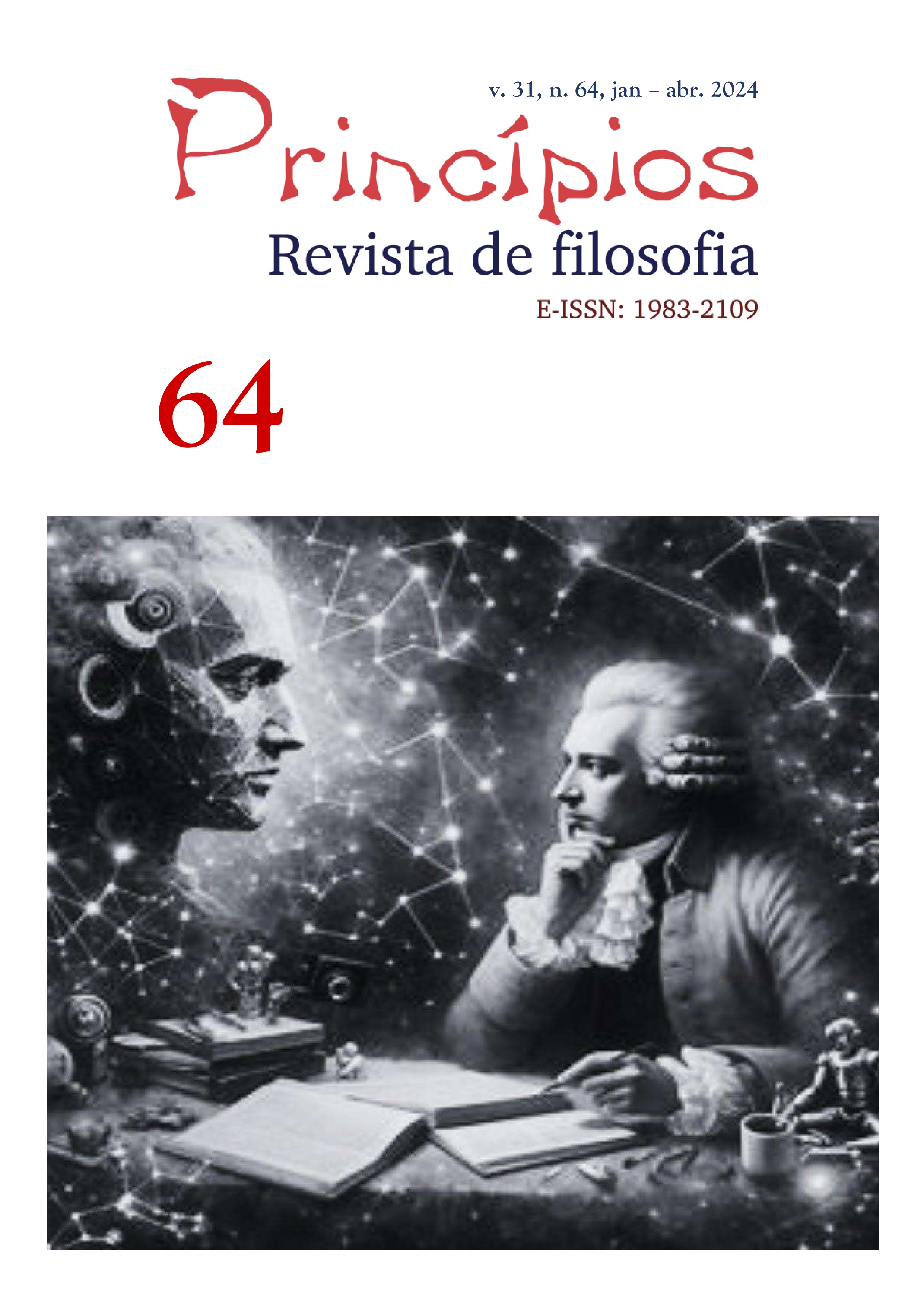
O que Kant pode nos ensinar sobre tolerância
DOI :
https://doi.org/10.21680/1983-2109.2024v31n64ID35176Mots-clés :
Princípio da tolerância, Uso público da razão, Argumento transcendentalRésumé
Neste ensaio, exploro como os princípios filosóficos de Kant podem oferecer uma abordagem que ainda
hoje é relevante para lidar com discursos intolerantes. Apresento a distinção entre o uso público e o uso privado da
razão para Kant, visando demonstrar que, segundo o autor, um representante público eleito democraticamente que
defende ideias antidemocráticas deveria renunciar ao seu cargo. Utilizando-me do raciocínio do paradoxo da
tolerância de Popper, mostro que ser intolerante com discursos antidemocráticos é uma condição necessária para
uma democracia existir. Porém, a partir de um argumento parcialmente transcendental, mostro que isso não pode se
aplicar a um indivíduo que acredita em um discurso antidemocrático. Ainda assim, mostro que podemos extrair
considerações importantes a partir disso, a saber: o indivíduo antidemocrático está lutando pelo seu “direito” de
expressar somente seu próprio ponto de vista, enquanto o indivíduo genuinamente tolerante/democrático defende a
possibilidade de vários pontos de vistas divergentes coexistirem.
Téléchargements
Références
BAIN, A. & FORMOSA, P. Toleration and Some Related Concepts in Kant. Kantian Review 25.2
(2020): 167-192.
KANT, I. Resposta à Pergunta: Que é ‘Esclarecimento’?. In: Immanuel Kant: Textos Seletos.
Trad. de Floriano de Souza Fernandes, 2ª ed. Petrópolis/RJ: Vozes, 1985.
KANT, I. Crítica da Razão Pura. Trad. Fernando Costa Mattos, 4ª ed. Petrópolis/RJ: Vozes,
O’NEILL, O. The Public Use of Reason. Political Theory Vol. 14, No. 4 (1986): 523–551.
POPPER, K. A Sociedade Aberta e Seus Inimigos: 1º Volume – O Fascínio de Platão. Trad.
Milton Amado, Belo Horizonte/MG: Itatiaia, 1974.
SACKS, M. The Nature of Transcendental Arguments. International Journal of Philosophical
Studies Vol. 13(4), (2006): 439–460.
Téléchargements
Publié-e
Comment citer
Numéro
Rubrique
Licence
© João Daniel Dantas 2024

Cette œuvre est sous licence Creative Commons Attribution - Pas d'Utilisation Commerciale - Partage dans les Mêmes Conditions 4.0 International.
Autores mantêm os direitos autorais e concedem à revista o direito de primeira publicação, com o trabalho simultaneamente licenciado sob a Licença Creative Commons Attribution que permite o compartilhamento do trabalho com reconhecimento da autoria e publicação inicial nesta revista.
Termos da licença:
 |
Atribuição (BY) | Os licenciados têm o direito de copiar, distribuir, exibir e executar a obra e fazer trabalhos derivados dela, conquanto que deem créditos devidos ao autor ou licenciador, na maneira especificada por estes. |
 |
Não Comercial (NC) | Os licenciados podem copiar, distribuir, exibir e executar a obra e fazer trabalhos derivados dela, desde que sejam para fins não comerciais. |
 |
Compartilha Igual (SA) | Os licenciados devem distribuir obras derivadas somente sob uma licença idêntica à que governa a obra original ou menos restritiva. |
 Português (Brasil)
 English
 Español (España)
 Français (Canada)