DESARROLLO DE LA ESCRITURA MÁS ALLÁ DE LAS LETRAS MAYÚSCULAS: EVIDENCIA LINGÜÍSTICA Y NEUROCOGNITIVA
EVIDÊNCIAS LINGUÍSTICAS E NEUROCOGNITIVAS
DOI:
https://doi.org/10.21680/1984-3879.2026v26n2ID44743Palabras clave:
aquisição da leitura e da escrita; desenvolvimento da biliteracia; uso da letra cursiva; letra bastão; ciência cognitiva da leituraResumen
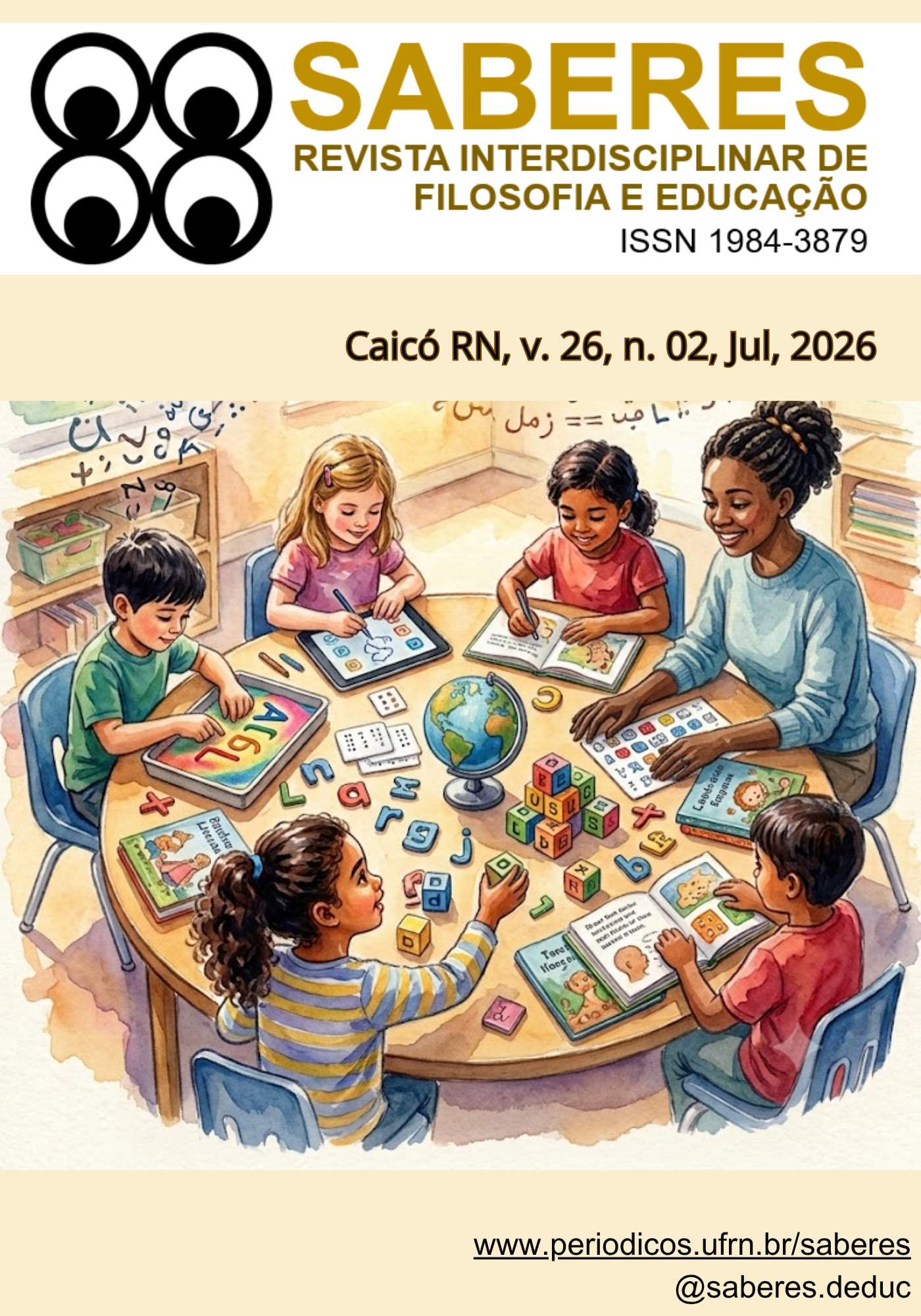
This study examines the development of writing in a bilingual educational context from a linguistic and neurocognitive perspective, questioning the predominance of block letters in the early years of literacy in Brazil. Based on research on language acquisition, biliteracy, and the cognitive science of reading, the article argues that restricting initial writing instruction to a single script impoverishes graphic input and may delay the consolidation of reading and writing. The discussion is supported by a longitudinal observational study conducted in an international bilingual school in São Paulo, based on the analysis of approximately 1,500 written productions by students, collected in 2019 and 2024. The results reveal a clear contrast between the groups analyzed: students initially literate exclusively with block letters showed persistent graphic instability in later years, while students exposed from the beginning to multiple scripts (block, print, and cursive) demonstrated earlier consolidation of writing and greater graphic consistency. The findings suggest that early and integrated exposure to multiple scripts can promote efficient literacy development by aligning pedagogical practices with the cognitive mechanisms underlying reading acquisition. The study concludes with a discussion of the implications for literacy instruction in bilingual and monolingual educational contexts.
Descargas
Citas
BERNINGER, V. W.; WOLF, B. Teaching students with dyslexia and dysgraphia: Lessons from teaching and science. Baltimore: Brookes, 2009.
BIALYSTOK, E. Bilingualism in development: Language, literacy, and cognition. Cambridge: Cambridge University Press, 2001.
BIALYSTOK, E. Cognitive processes in bilingual children: A critical review. In: KAPLAN, R. (Ed.). The Oxford Handbook of Applied Linguistics. Oxford: Oxford University Press, 2002.
BRASIL. Ministério da Educação. Base Nacional Comum Curricular. Brasília: MEC, 2017.
CHOMSKY, N. Lectures on government and binding. Dordrecht: Foris, 1981.
CHOMSKY, N. Knowledge of language: Its nature, origin, and use. New York: Praeger, 1986.
CHOMSKY, N. The minimalist program. Cambridge, MA: MIT Press, 1995.
CUMMINS, J. Cognitive/academic language proficiency, linguistic interdependence, the optimum age question and some other matters. Working Papers on Bilingualism, Toronto, n. 19, p. 121-129, 1979.
CUMMINS, J. Negotiating identities: Education for empowerment in a diverse society. Los Angeles: California Association for Bilingual Education, 2001.
DEHAENE, S. Reading in the brain: The new science of how we read. New York: Penguin Viking, 2009.
DEHAENE, S. How we learn: Why brains learn better than any machine… for now. New York: Penguin Random House, 2020.
EHRI, L. C. Learning to read words: Theory, findings, and issues. Scientific Studies of Reading, London, v. 9, n. 2, p. 167-188, 2005.
FERREIRO, E.; TEBEROSKY, A. Psicogênese da língua escrita. São Paulo: Cortez/Autores Associados, 1985.
FINGER, I.; BRENTANO, L. de S.; ALVES, U. K. Literacia e biliteracia: da teoria à prática. Campinas, SP: Pontes Editores, 2025.
JAMES, K. H.; ENGELHARDT, L. The effects of handwriting experience on functional brain development in pre-literate children. Trends in Neuroscience and Education, Amsterdam, v. 1, n. 1, p. 32-42, 2012.
KATO, M. A gramática do letrado: questões para a teoria gramatical. In: KATO, M.; TARALLO, F. (Orgs.). Estudos em gramática gerativa do português. Campinas: Pontes, 2005. p. 173-189.
KODA, K. Reading and language learning: Crosslinguistic constraints on second language reading development. Language Learning, Hoboken, v. 57, n. 1, p. 1-44, 2007. DOI: https://doi.org/10.1111/0023-8333.101997010-i1.
MARCELINO, M. Aquisição de segunda língua e bilinguismo. Revista Intercâmbio, São Paulo, v. XXXV, p. 38-67, 2017. LAEL/PUCSP. ISSN 2237-759X.
PAAS, F.; AYRES, P. Cognitive load theory: A broader view on the role of memory in learning and education. Educational Psychology Review, New York, v. 26, n. 2, p. 191-195, 2014. DOI: https://doi.org/10.1007/s10648-014-9263-5.
PURANIK, C. S.; ALOTAIBA, S. Examining the contribution of handwriting and spelling to written expression in kindergarten children. Reading and Writing, Dordrecht, v. 25, n. 7, p. 1523-1546, 2012.
ROEPER, T. Universal bilingualism. Bilingualism: Language and Cognition, v. 2, n. 3, p. 169-186, 1999.
SOARES, M. Letramento e alfabetização: as muitas facetas. In: SOARES, M. Letramento: um tema em três gêneros. Belo Horizonte: Autêntica, 2004. p. 13-26.
TORRES, A. R.; MOTA, N. B.; ADAMY, N.; NASCHOLD, A.; LIMA, T. Z.;
COPELLI, M.; WEISSHEIMER, J.; PEGADO, F.; RIBEIRO, S. Selective inhibition of mirror invariance for letters consolidated by sleep doubles reading fluency. Current Biology, Cambridge, v. 31, n. 4, p. 742-752, 2021. DOI: https://doi.org/10.1016/j.cub.2020.11.031
SWELLER, J. Cognitive load during problem solving: Effects on learning. Cognitive Science, Hoboken, v. 12, n. 2, p. 257-285, 1988. DOI: https://doi.org/10.1207/s15516709cog1202_4.
Descargas
Publicado
Cómo citar
Número
Sección
Licencia
Derechos de autor 2026 Marcello Marcelino

Esta obra está bajo una licencia internacional Creative Commons Atribución-NoComercial-CompartirIgual 4.0.
Este obra está licenciado com uma Licença Creative Commons Atribuição 4.0 Internacional.
Autores que publicam nesta revista concordam com os seguintes termos:
a. Autores mantém os direitos autorais e concedem à revista o direito de primeira publicação, com o trabalho simultaneamente licenciado sob a Licença Creative Commons Attribution 4.0 que permite o compartilhamento do trabalho com reconhecimento da autoria e publicação inicial nesta revista.
b. Autores têm autorização para assumir contratos adicionais separadamente, para distribuição não-exclusiva da versão do trabalho publicada nesta revista (ex.: publicar em repositório institucional ou como capítulo de livro), com reconhecimento de autoria e publicação inicial nesta revista.
c. Autores têm permissão para publicar e distribuir seu trabalho online (ex.: em repositórios institucionais ou na sua página pessoal) após a publicação inicial nesta revista, já que isso pode gerar alterações produtivas, bem como aumentar o impacto e a citação do trabalho publicado (Veja O Efeito do Acesso Livre).
Foram feitos todos os esforços para identificar e creditar os detentores de direitos sobre as imagens publicadas. Se tem direitos sobre alguma destas imagens e não foi corretamente identificado, por favor, entre em contato com a revista Saberes e publicaremos a correção num dos próximos números.

 English
 Español (España)
 Português (Brasil)